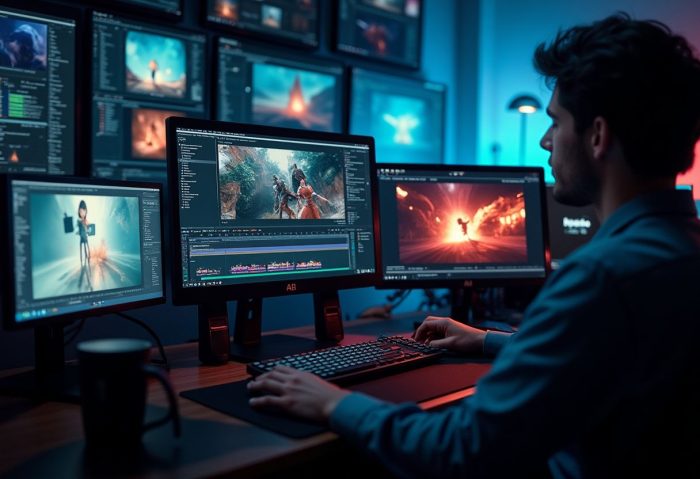
The world of visual design is evolving at a breakneck speed, and motion design has established itself as an essential discipline today. It is not merely a passing trend but a true transformation in the way we conceive and convey visual messages. Unlike traditional graphic design, which primarily relies on static images, motion design adds a dynamic dimension to visual communication. Companies, brands, and content creators have quickly recognized the potential of this new form of expression that captures attention and engages viewers in a more immersive way. But what truly distinguishes motion design from traditional graphic design in terms of skills?
Technical Skills: From Stability to Animation
The traditional graphic designer is often associated with the creation of static visual elements such as logos, posters, or brochures. The basic tools include software like Adobe Photoshop or Illustrator. These skills focus on design, typography, and color usage. The emergence of motion design has broadened this scope.
- Specialized Software: The motion designer uses different tools such as Adobe After Effects, Cinema 4D, or Blender. These programs allow for the creation of complex animations that require a deep understanding of three-dimensional space and movement.
- Knowledge of Animation Principles: Animation skills go beyond the simple creation of images; they require mastery of animation principles such as timing, interpolation, and anticipation. These concepts are essential for bringing graphic elements to life.
Artistic Skills: The Balance Between Aesthetics and Storytelling
Traditional graphic design often relies on a keen sense of aesthetics, from color choice to the arrangement of visual elements. However, motion design introduces a new dimension to this artistic realm.
In motion design, the artist must not only design in a visually pleasing way but also tell a story fluidly. Visual storytelling is a central aspect of motion design, as animations must guide the viewer through a sequence of events or ideas. This requires a deep understanding of narrative structure, which differs significantly from static composition.

Communication Skills: Dynamic Interaction with the Audience
An essential component of motion design is its ability to engage the viewer. While traditional graphic design focuses on immediate visual impact, motion design offers a dynamic interaction that captivates the audience in a unique way.
- Storytelling: Creating a captivating story is crucial for the motion designer, who must build a compelling narrative through movement and sound.
- Sensitivity to User Experience: The motion designer must understand how animations affect the user experience. Smooth transitions and timing are essential to ensure that the audience remains engaged and interested.
Training: Acquiring Motion Design-Specific Skills
To thrive in this growing field, a motion design training is often necessary. This training allows for the acquisition of specialized skills that extend beyond software mastery to include aspects such as project management and teamwork.
The focus is on learning through practice, developing an impressive portfolio, and understanding current market trends. These elements are crucial for standing out in a sector where competition is fierce but opportunities are vast.
Considering the rapid evolution of technologies and audience expectations, it becomes evident that motion design does not merely complement traditional graphic design but redefines it. The skills required to excel in this field are varied and dynamic, encompassing technical, artistic, and communication aspects.