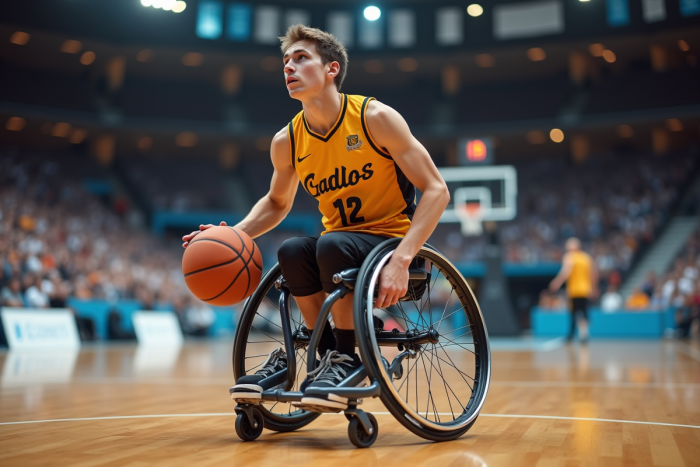
Paralympic athletics requires that an athlete amputated of one arm competes in the same category as another amputated of both legs, as long as their disabilities are deemed to have equivalent impact. Women’s boxing, on the other hand, maintains weight categories identical to those of men while prohibiting certain punches that are allowed for their male counterparts. In judo, the recent merger of two disability classes has sparked protests from athletes who feel that their chances of victory have been compromised.
Some federations discuss the elimination of male-female categories in the name of inclusion, while others oppose this on the grounds of preserving sporting fairness.
Equality of Opportunity and Sports Categories: Understanding the Foundations of Competition for Athletes with Disabilities
Behind every competition of sport and disability lies a basic rule: to give each athlete an opportunity to compete on an equal footing, taking into account unique physical and sensory realities. At the heart of the system is classification, initially developed at the international level before being adapted by each national federation. The process is far from a simple administrative step: it combines medical expertise and technical analysis to closely match actual performances. The athlete is first examined by a medical classifier, a specialist in the pathology, and then observed during sports movements by a technical classifier. Each federation refines its own grid, indicating that each discipline shapes its own rules and compromises.
Here’s how these major families of categories are structured, each responding to specific criteria:
- Physical disability: amputations, spinal cord injuries, cerebral palsy, aftereffects of polio, muscular dystrophy.
- Visual impairment: three levels, from mild impairment to complete blindness, under the expertise of an ophthalmologist.
- Hearing impairment: a single class for hearing loss of at least 55 dB, verified by an ENT doctor.
- Intellectual disability: IQ below 70 and limitations in daily adaptation, assessed with an educational reference.
This system aims to preserve sporting meritocracy and equality of opportunity. Let’s take a concrete example: in para-athletics, each category is coded by a letter and a number. The lower the number, the more pronounced the disability. The T44 category of the Paralympic Games thus groups athletes amputated below the knee, facing comparable technical challenges. This organization is not limited to a sporting issue: it also reflects the desire to recognize each individual’s uniqueness while paving the way for shared performance. However, there are exceptional situations. Deaf athletes, for example, do not participate in the Paralympic Games but in the Deaflympics, highlighting the ongoing debates about the notion of equity and its concrete limits.
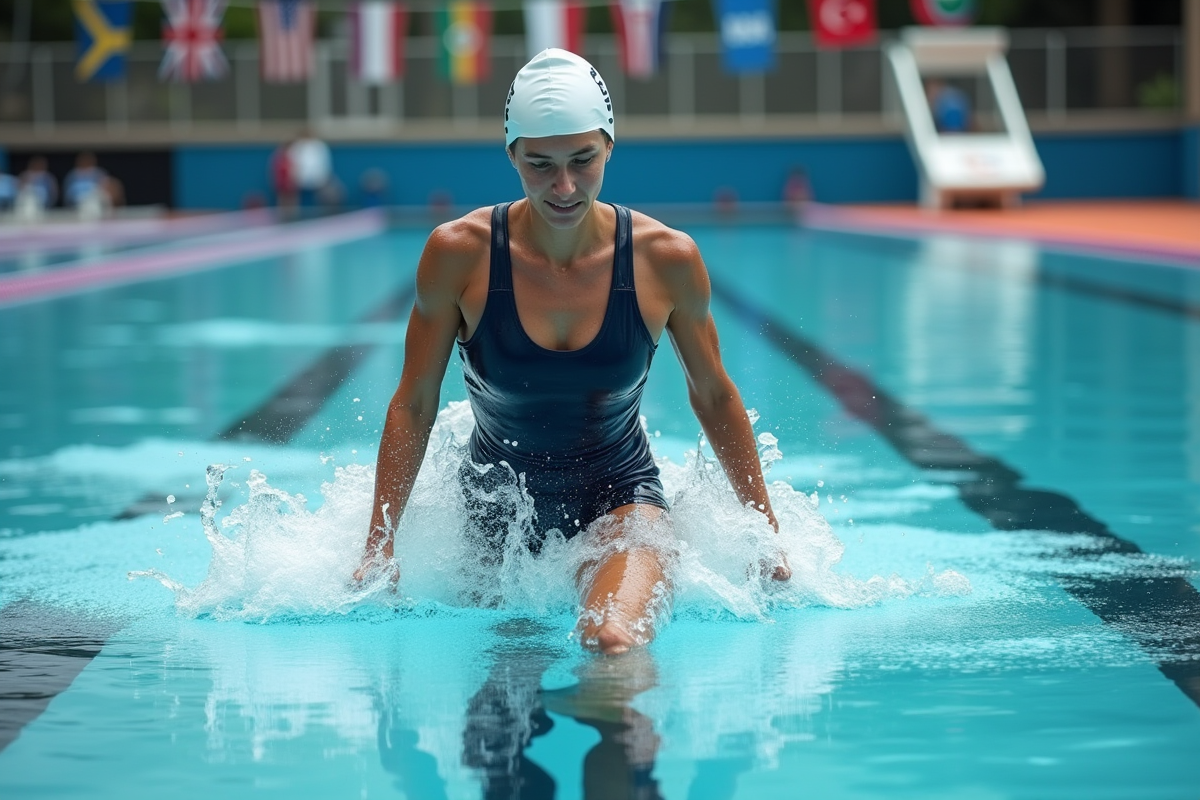
The Abolition of Male-Female Categories: Towards a New Era of Inclusive Sport or a Risk to Fairness?
The question of merging categories generates real excitement in sport and disability. Should we abolish the separation between men and women to aim for unambiguous equality, or preserve markers that ensure tangible fairness? The debate crosses sports bodies, sometimes with intensity. The idea is appealing: bringing together, in a single functional category, all athletes, regardless of gender, would enhance competition and challenge age-old patterns.
Heinz Frei, a figure in handbiking, openly advocates for this evolution. According to him, establishing a single category would provide a more competitive arena where performance would take precedence over gender. Conversely, Beat Bösch, a specialist in wheelchair sprinting, categorically opposes this. He points to the real risks of marginalization, especially for women and for those whose disabilities further reduce physical capabilities. For him, merging is not a universal solution: it could disadvantage already vulnerable profiles against more powerful competitors.
The implications of such a reform would go far beyond the simple organization of events. It would touch on recognition on the public stage, the place of women in adaptive sports, and what equality in sport represents. One can also consider the shadow of exclusion: in certain disciplines where performance gaps are already clear, disparities could be exacerbated. Merging genders does not mechanically guarantee justice; quite the opposite. It requires a profound rethinking of the model and questioning the role that society assigns to sport: should it serve as an impartial arbiter or simply reflect physical differences?
As federations ponder these questions, sport and disability continues to carve its own path, between the ideal of inclusion and the demand for justice. The debate is just beginning, and it is already shaping the contours of the sport of tomorrow.