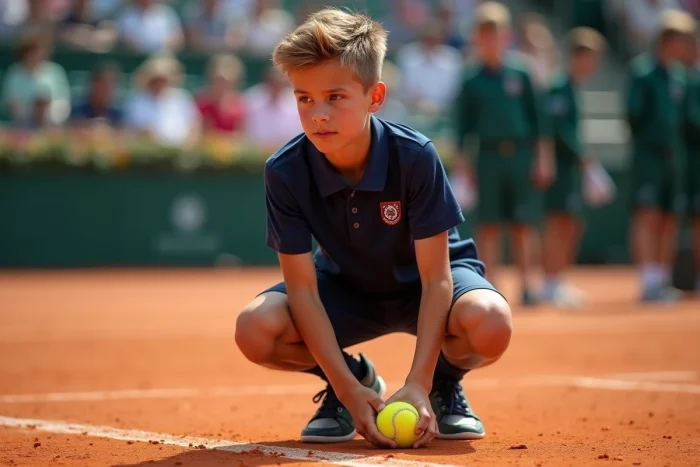
Every year, the Roland Garros tournament mobilizes several hundred young ball boys and girls, known as “ballos,” on the Parisian courts. Their discreet yet constant presence raises a recurring question: do these young people receive compensation for their two weeks of intensive service on the clay courts?
“We Are Ballos” Program: A System That Goes Beyond Simple Recruitment
Most articles on the subject focus on the question of pay. The reality of the system put in place by the FFT goes far beyond a simple temporary commitment during the tournament.
Since 2023, the French Tennis Federation has structured the management of ball boys and girls as a full annual program. The official We Are Ballos platform details a preparation schedule that spans several months, with regional training organized by the leagues, dedicated coaches, a medical team, and even psychological support staff.
This professionalization of management transforms the experience of the ballos. The journey begins well before the tournament, with progressive selections at the regional league level, followed by national gatherings. To better understand the salary of ball boys and girls at Roland Garros, one must first grasp that the very notion of “salary” is misleading in this context.
Compensation for Ball Boys and Girls: What the FFT Actually Pays
Ball boys and girls at Roland Garros are not employees in the legal sense of the Labor Code. The ballos do not receive a fixed salary but benefit from a range of material and logistical compensations regulated by the FFT.
The available data do not allow for a detailed amount paid to each ball boy or girl for the 2024 edition. Field reports vary on this point: some sources mention daily allowances or reimbursements, while others emphasize the essentially voluntary nature of the mission.
What is documented by the FFT, however, concerns in-kind benefits:
- A complete provision of sports equipment (official tournament outfits, shoes, accessories) provided to each selected ball boy or girl.
- Invitations to attend matches outside of their service slots, with privileged access to the tournament’s behind-the-scenes.
- The coverage of transportation and accommodation costs, a point on which the FFT has explicitly communicated for several years to ensure equal access for candidates from the provinces.
Protection of Minors and Ethical Charter: The Unknown Regulatory Framework
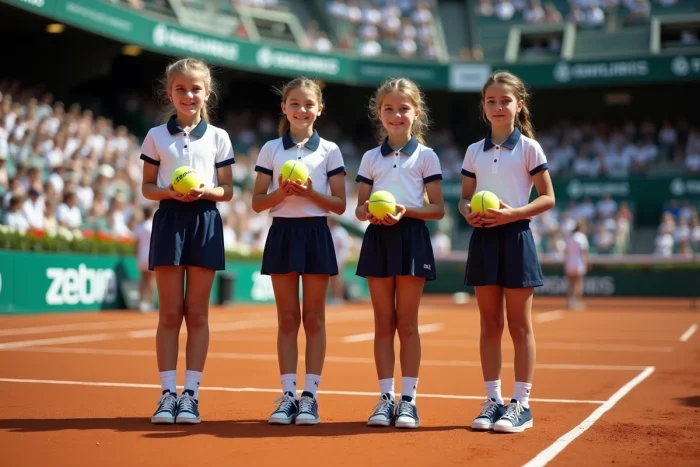
Most ball boys and girls are minors, aged twelve to sixteen depending on the edition. This status imposes legal obligations on the FFT that articles focused on compensation rarely address.
The internal regulations of Roland Garros have integrated enhanced requirements regarding the protection of minors in recent years. This includes an ethical charter signed by the supervisors, formalized reporting procedures, and a stricter adult supervision ratio than before.
This regulatory dimension directly impacts the functioning of the program. Each coach supervising a group of ballos is subject to prior checks. Working conditions (duration of rotations on the court, rest periods, hydration) are codified to avoid any situation of exploitation, even involuntary, of young volunteers.
An Increased Vigilance Context in 2024
Several media-covered incidents in recent years have highlighted the vulnerability of ball boys and girls on the court. In 2026, a video showing a player pushing a ball girl sparked a wave of outrage reported by the national press. Such episodes increase the pressure on organizers to formalize the protection of these young volunteers.
The FFT has responded by tightening intervention protocols: a supervisor can now remove a ball boy or girl from the court if the situation warrants it, without waiting for the end of the set or match.
Selection Process for Ballos: Concrete Steps Before Roland Garros
The selection process remains poorly documented in mainstream media, which focus on the tournament itself. However, the FFT organizes a structured journey in several phases.
Applications first go through the regional leagues. Detection camps are organized locally, where young candidates are evaluated on their responsiveness, physical condition, and ability to maintain concentration for long periods.
Those selected at the regional level then participate in national gatherings. This is where the final selection takes place, with criteria that go beyond simple agility:
- The ability to work as a team under pressure, in a noisy and televised environment.
- Consistency: a ball boy or girl must maintain the same level of attention for several hours, during matches that can stretch on.
- Strict adherence to positioning and movement instructions, codified by the program coaches.
This journey spans several months. For a teenager from the provinces, the commitment represents a significant personal and family investment, well before stepping onto the Parisian clay courts.
Comparison with Other Grand Slam Tournaments
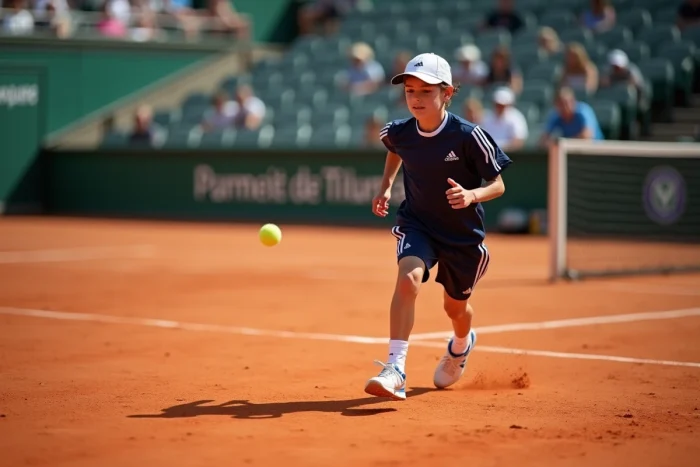
Roland Garros is not the only tournament that mobilizes volunteer or minimally compensated ball boys and girls. The four Grand Slams operate on comparable models, with local nuances.
At Wimbledon, ball boys and girls are recruited from students of certain partner schools in London. The Australian Open and the US Open follow similar logics, with training programs beforehand and material compensations rather than substantial monetary remuneration.
What distinguishes the French model is the structuring of the journey through regional leagues and the emphasis on geographical accessibility. The logistical support for candidates far from Paris is a specific effort by the FFT, in a context where rising transportation and accommodation costs could exclude motivated young people living far from the capital.
The debate on the compensation of ball boys and girls at Roland Garros reflects a broader tension in professional sports: tournaments that generate tens of millions of euros in prize money partially rely on the work of young volunteers. The FFT invests in management and logistics, but the question of formalized compensation remains open for future editions.