
Fiber optics everywhere, tablets in abundance, promises of modernity lined up on the desks of high school students in the Grand Est. Since 2021, the region has displayed figures that would make many territories envious: every public high school connected to fiber, over 100,000 personal devices distributed to students and teachers. A logistical feat that leaves little room for improvisation.
Behind the scenes, however, not all indicators are green. The training of teaching teams is lagging behind the wave of equipment that has arrived in classrooms. In some institutions, the multiplication of tools is even deepening the digital divide, instead of bridging it.
Overview of Educational Digital Technology in the Grand Est: Current State and Challenges
School digital technology is advancing rapidly in the Grand Est, but it leaves clear disparities in its wake. From one high school to another, the transformation is far from uniform. In Reims, Strasbourg, and Lorraine, the DRANE and the regional digital plan are orchestrating a remarkable ramp-up. The allocations are pouring in: cutting-edge tablets, shared digital spaces, educational resource platforms deployed on a large scale.
In daily life, these tools are reshaping the way of teaching and learning. Online corrections, document exchanges, and video conferences are becoming new reflexes. The example of the generalization of the Webmel service in Nancy-Metz shows how digital collaboration is gaining ground, even in the management of professional messaging.
But on the ground, training does not always keep pace. Despite the mobilization of the academy and the Ministry of National Education, teams are juggling new tools without always having the necessary time or support.
Here are some major challenges that persist in the region:
- Access Equality: some high schools in rural areas still struggle to benefit from a stable connection.
- Digital Resources: the supply is plentiful, but the time to explore and integrate these tools remains scarce.
- Teaching Practices: developments vary from one subject to another, from one class to another.
The Grand Est plays a leading role on the national stage in educational digital technology. The stated ambition: to transform access to knowledge, open schools to the changes in the world, and equip students for tomorrow. But technology alone does not solve everything. Between a persistent digital divide, heterogeneous uses, and urgent training needs, everyone measures the distance between equipment and the reality on the ground.
What Levers to Strengthen Digital Culture in Schools and Institutions in the Region?
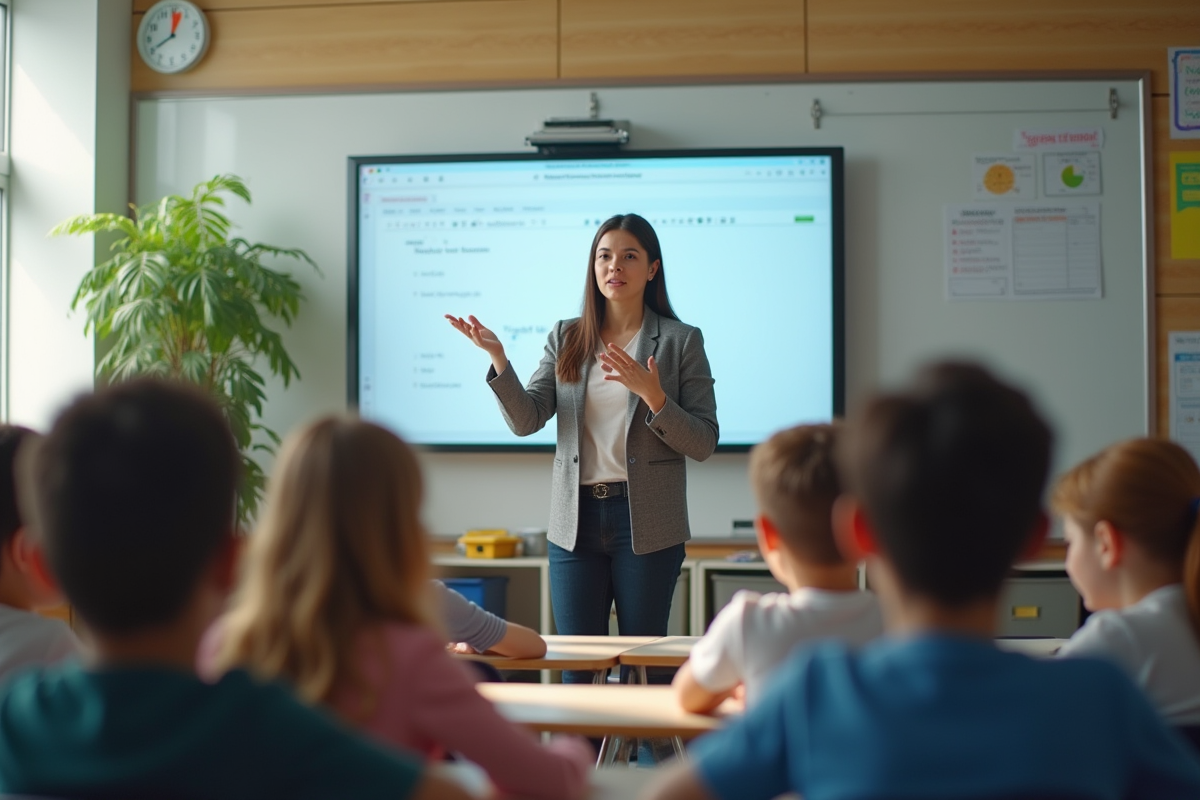
To establish a true digital culture, the entire educational community must be involved. Teachers remain on the front lines: their skill development is becoming essential. Training sessions organized by the Nancy-Metz academy are multiplying, but access is not equal across subjects. Science, economics-management, visual arts… each discipline seeks its own benchmarks to make the best use of digital resources.
On the student side, uses are evolving quickly. The questions raised by the emergence of generative AIs are shaking up benchmarks, questioning assessment, and stimulating creativity. To support these changes, teaching teams rely on dashboards, adapt learning paths, and increasingly encourage autonomy.
Among the action avenues to strengthen this dynamic, several levers stand out:
- Develop cross-disciplinary projects, integrating subjects like physics-chemistry or sustainable development into digital pathways.
- Highlight feedback and share educational resources through newsletters or collaborative spaces.
The region, under the impetus of the Grand Est, is focusing on concrete initiatives: experimenting with new technologies, supporting the creation of local content, and providing nearby technical support. Through the network between institutions, local authorities, and the ministry, a conducive ecosystem for innovation is taking shape. However, the question of equitable access to tools remains unresolved, especially in rural areas.
The educational digital project has been launched, but the road ahead is long. Yet in every classroom where a student shares their screen with their teacher, an entire generation is preparing to face the world to come.